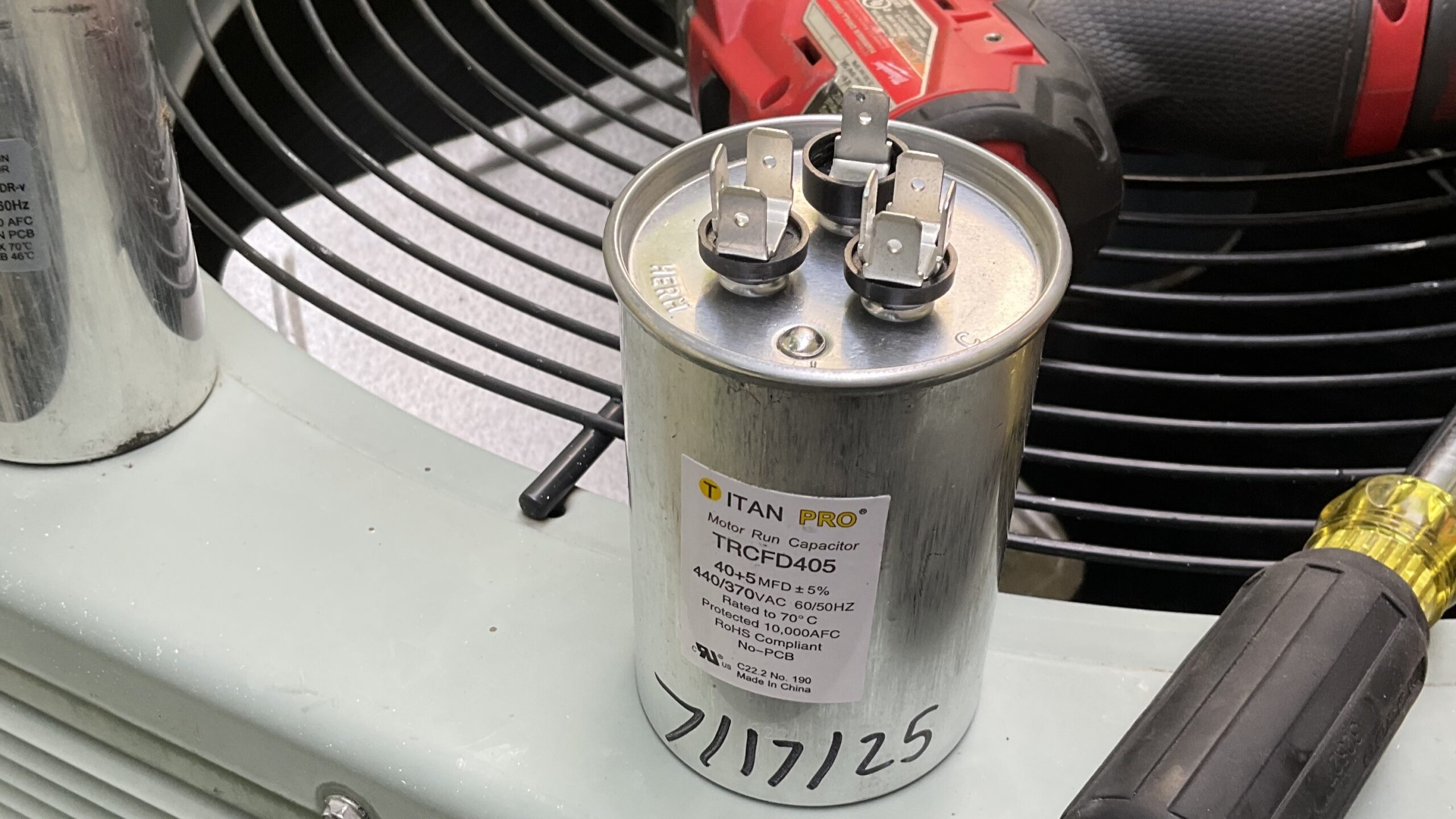
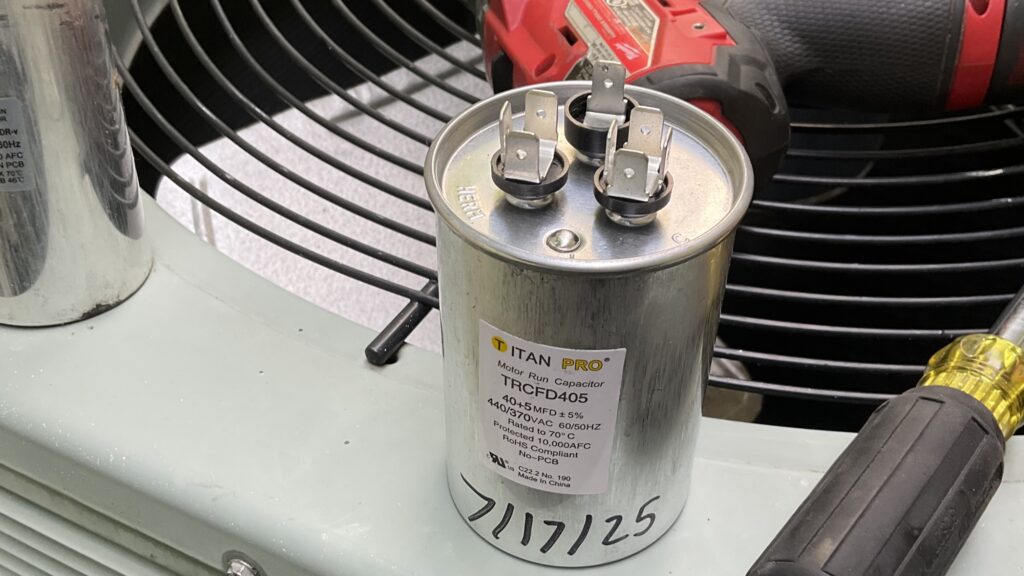
An AC capacitor may be failing if your air conditioner hums but does not start, shuts off quickly, blows warm air, or has an outdoor fan that will not run. Capacitors are small electrical parts, but they play a direct role in helping the compressor and fan motors start and operate.
This is an HVAC repair issue, not a homeowner DIY repair. Capacitors store electricity, and testing or replacing them requires the right tools and safety process.
If your system shows capacitor-related symptoms, don’t open the outdoor unit, touch wiring or electrical parts, or test or replace the capacitor yourself. An AC repair should be scheduled, and Princeton Air can help.
What should homeowners check before peak season?
Homeowners should check the filter, thermostat, outdoor-unit clearance, and system startup before peak cooling season, then schedule maintenance if the system starts slowly or sounds different.
Capacitor problems often become visible when the AC is under heavier demand. New Jersey’s humid summer weather can make weak parts show themselves quickly because the system has to start and run more often.
Before peak season, check:
- The air filter
Replace it if it looks clogged, gray, or packed with dust. - The thermostat
Make sure it is set to cool and set below the indoor temperature. - Outdoor-unit clearance
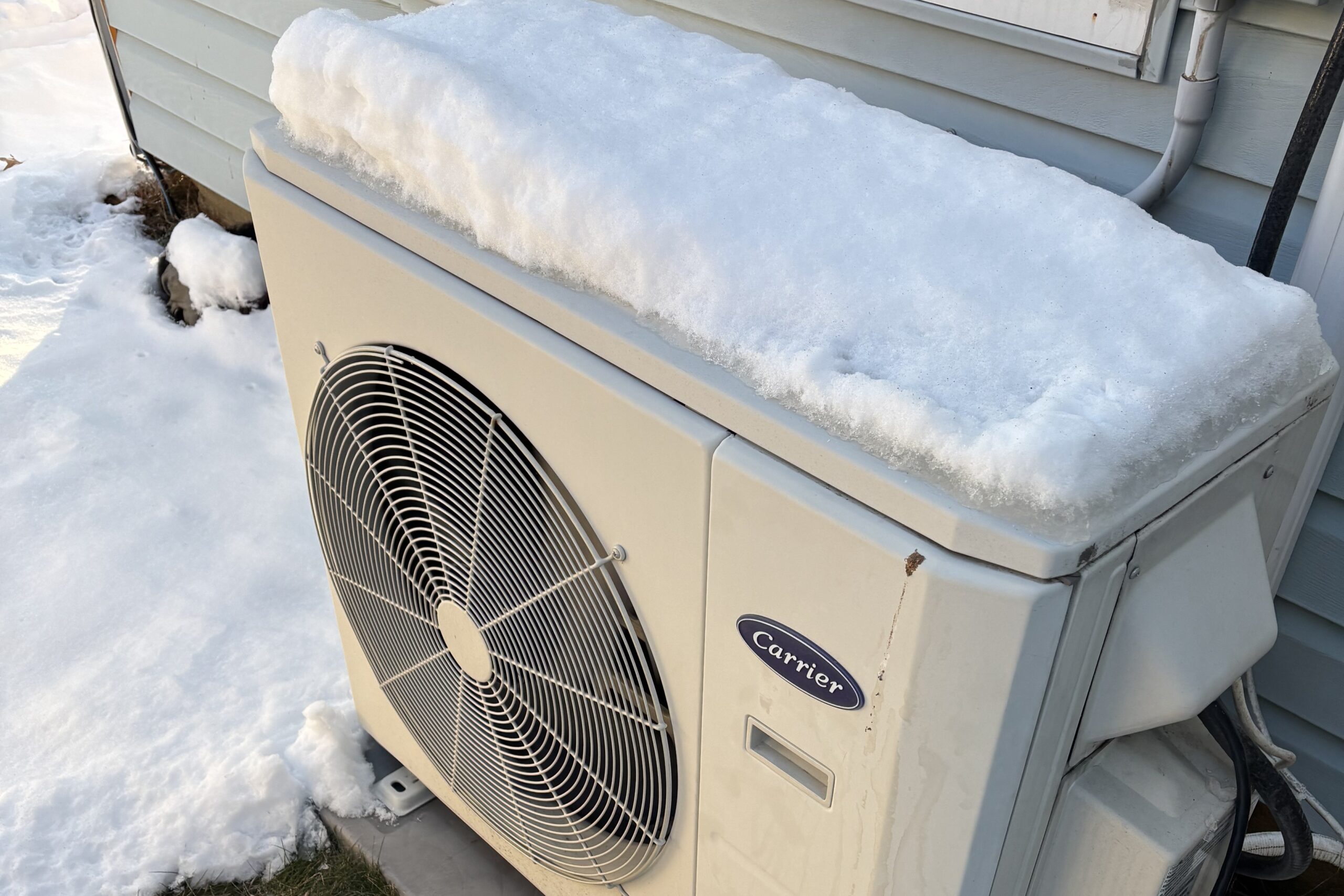
Clear leaves, grass clippings, weeds, and stored items from around the unit. - Startup sound
Listen for humming, clicking, buzzing, or delayed startup. - Cooling pattern
Notice whether the system starts smoothly or turns on and off repeatedly.
A healthy system should start smoothly, run with a steady sound, and cool the home without repeated starts and stops. If the outdoor unit hums, clicks, or struggles to start, a capacitor issue may be one possible cause.
Professional air conditioning maintenance can help catch early electrical and performance concerns before the next long heat stretch.
What signs mean your HVAC system needs attention?
Your HVAC system needs attention when the AC hums but will not turn on, starts slowly, shuts off quickly, blows warm air, or has a fan that does not spin.
Common bad AC capacitor symptoms include:
- Outdoor unit humming but not starting
- AC clicking, then stopping
- Cooling starts slowly or feels delayed
- Outdoor fan not spinning
- Warm air from vents
- AC turns on, then shuts off too soon
- Burning smell or unusual electrical odor
- Higher energy use with weaker cooling
- Breaker trips after the system tries to start
Some symptoms can overlap with other AC problems. Similar signs may also point to:
- A failed motor
- A dirty coil
- A low refrigerant charge
- A loose electrical connection
- A control-board issue
- Another startup or cooling-performance problem
That is why diagnosis matters. A capacitor may be part of the issue, but the full system still needs to be checked.
What can you safely check before calling?
You can safely check the thermostat setting, filter, breaker position, and outdoor-unit condition before calling. Do not open the AC cabinet, touch wiring, or try to test the capacitor yourself.
Start with these homeowner-safe checks:
- Check the thermostat.
Make sure it is set to cooling and the temperature is set below the indoor temperature. If the display is blank, replace batteries if your thermostat uses them. - Check the filter.
A clogged filter can reduce airflow and make cooling problems worse. Regular maintenance of air conditioner filters, coils, fins, and refrigerant lines is essential for efficient and effective performance. - Check the breaker once.
If the breaker has tripped, reset it one time. If it trips again, stop there. - Check the outdoor unit.
Make sure the unit has clear airflow around it. Clear nearby leaves, grass clippings, weeds, or stored items. - Watch for warning signs.
Humming, burning odors, visible damage, or repeated breaker trips mean it is time to stop and call.
Do not reach into the unit or spin the fan blade by hand.
Safety note — if you hear humming, smell burning, see damage, or the breaker trips again after one reset, stop there. Repeated resets can create more risk and do not solve the underlying problem. Princeton Air offers 24/7 emergency HVAC and emergency electrical service.
When should you call a professional?
Call a professional when the AC hums but will not start, the fan will not spin, the breaker trips, the system short cycles, or cooling stops during hot weather.
That is beyond a safe homeowner check. An HVAC technician can:
- Test the capacitor
- Inspect contactors and wiring
- Verify motor condition
- Check the outdoor fan
- Review electrical controls
- Confirm whether the symptom is truly capacitor-related
Capacitors support AC compressor and fan motor startup and operation, which is why this diagnosis belongs inside the equipment service process.
If your AC started humming, clicking, or shutting off during the last hot day, schedule a diagnostic visit before the next hot one
When should you repair vs. replace?
AC repair is usually the right path when the capacitor is the main failed part and the rest of the AC system is in good condition. AC replacement becomes a larger conversation when capacitor failure is paired with age, repeated breakdowns, weak cooling, or major component issues.
A capacitor is a repairable component, but it should not be viewed in isolation. Replacement may be worth discussing if the system also has:
- Recurring electrical problems
- Compressor concerns
- Motor issues
- Weak or uneven cooling
- Repeated breakdowns
- Older equipment
- Repair costs that keep adding up
For many New Jersey homeowners, the practical questions are:
- Will this repair restore reliable cooling?
- Is the system likely to need more work soon?
- How old is the equipment?
- How well does the system cool the home now?
- Would a properly sized replacement be more practical long term?
That answer depends on equipment age, condition, repair history, and how well the system cools the home.
What affects HVAC cost in New Jersey?
HVAC cost for AC capacitor service depends on the diagnosis, part type, system access, whether related electrical components are affected, and whether the issue has damaged the fan motor or compressor.
A simple capacitor replacement is different from a repair involving a motor, contactor, wiring problem, compressor issue, or repeated breaker trips.
Cost drivers may include:
- Diagnosis: The technician needs to confirm whether the capacitor is the failed part.
- Part type: Different systems may use different capacitor types or ratings.
- Related components: Motors, contactors, wiring, or controls may also need attention.
- System access: Finished basements, tight equipment areas, or constrained outdoor-unit locations can affect service time.
- Equipment condition: Older systems may need a broader performance review.
- Startup testing: The system should be tested after repair to confirm safe operation.
Access also matters. Older homes in established New Jersey communities may have tight equipment locations, finished basements, or outdoor units placed in constrained areas.
How can maintenance reduce capacitor-related surprises?
Maintenance can reduce surprises by checking overall AC condition before the system reaches peak summer demand. It cannot prevent every capacitor failure, but it can reveal early signs of wear, electrical concerns, airflow issues, and system stress.
During maintenance, a technician may check:
- Coil condition
- Refrigerant charge
- Electrical connections
- Airflow
- Startup performance
- System cycling
- Thermostat operation
- Signs of wear or stress
That matters because capacitor symptoms often appear during startup. If the system struggles to start, hums, clicks, or trips a breaker, the issue needs a professional look.
For ongoing care:
- Review Princeton Air’s Home Comfort Club maintenance plan.
- Schedule seasonal maintenance before peak cooling demand.
- Watch for slow starts, humming, clicking, or short cycling.
- Schedule repair instead of routine maintenance if the AC is already failing to start.
What should you do next if you notice AC capacitor failure signs?
If you notice AC capacitor failure signs, stop at safe checks and schedule professional AC repair. Do not open the outdoor cabinet or handle electrical parts.
Here is the safest next step:
- Check the thermostat.
Confirm the system is set to cool and set below the indoor temperature. - Check the filter.
Replace it if it is clogged or dirty. - Check the breaker once.
Stop if it trips again. - Check outdoor-unit clearance.
Clear debris around the condenser, but do not open the unit. - Schedule service if symptoms continue.
Humming, clicking, short cycling, warm air, or failure to start needs a professional diagnosis.
If the AC still hums, clicks, short cycles, or will not start, schedule service with Princeton Air. A technician can test the capacitor safely, inspect related parts, and explain whether a targeted repair or broader system conversation makes sense.
Schedule service now before peak summer demand hits
Frequently Asked Questions
What are common AC capacitor failure signs?
Common AC capacitor failure signs include humming without startup, delayed startup, short cycling, warm air, an outdoor fan that will not spin, or a system that shuts off unexpectedly. These symptoms can also overlap with motor, wiring, or compressor issues, so professional diagnosis is important.
Why is my AC humming but not turning on?
An AC humming but not turning on may have a capacitor, motor, compressor, or electrical-control issue. A capacitor helps provide the electrical support AC motors need to start and run, so testing should be handled by an HVAC technician.
Why does my AC keep shutting off?
An AC that keeps shutting off may have a capacitor problem, airflow issue, thermostat issue, electrical fault, or other system concern. If the system short cycles, trips the breaker, or fails to cool, stop resetting it repeatedly and schedule service.
Can I replace an AC capacitor myself?
AC capacitor replacement should not be treated as a homeowner DIY repair because capacitors are electrical components that can store energy. Homeowners can safely check thermostat settings, filters, breakers, and outdoor-unit clearance, but capacitor testing and replacement should be done by a trained technician.
How long does an AC capacitor last?
AC capacitor lifespan varies by system use, heat exposure, electrical stress, part quality, and maintenance history. Because lifespan varies, warning signs such as humming, delayed startup, or short cycling are more useful than relying on a fixed year count.
When should I replace an AC capacitor?
An AC capacitor should be replaced when professional testing confirms that it has failed or is outside the correct operating range. If the system also has motor, compressor, or wiring issues, the technician should explain whether a capacitor replacement alone will restore reliable cooling.