

New Jersey winters love to keep us guessing. One day it’s slushy and 38°, the next it’s 12° with wind that cuts right through your soul.
If you live in Princeton, West Windsor, Hamilton, Edison, Freehold, or anywhere across Mercer, Middlesex, or Monmouth Counties, having a game plan for heating problems isn’t dramatic—it’s smart.
Below are the five most common emergency HVAC repairs we see during NJ winters, what you can safely check first, and when it’s time to tap out and call the licensed pros at Princeton Air.
What actually counts as an emergency HVAC repair in NJ winters?
Not every heating issue is an emergency—but some absolutely are.
In winter, an HVAC emergency is any problem that:
- Leaves your home without heat during freezing temps
- Creates a safety risk, like:
- A gas odor
- A carbon monoxide (CO) alarm
- Water leaking near electrical components
- A system that’s rapidly turning on and off (short cycling)
If there’s a risk to people, pets, or property—or the house is losing heat fast—it’s not “wait it out” territory.
No heat during a freeze—what should I check first?
Before assuming the worst, start with the basics. You’d be surprised how many “no heat” calls end right here:
- Make sure the thermostat is set to Heat (not Cool… it happens)
- Set the temperature above the current room temp
- Check that the furnace switch and breaker are on
- Look at the air filter—if it’s filthy, replace it
These quick checks solve a lot of problems and help prevent bigger ones.
If the system still won’t start, stop troubleshooting.
Ignition, combustion, or control issues are not DIY-friendly and can create carbon monoxide or electrical risks. That’s licensed-tech-only territory, and officially time for professional repair.
I smell gas or my CO alarm is sounding—what now?
No gray area here.
- Get everyone outside immediately
- Do not flip switches or use phones inside the house
- Call 911 and your gas utility from a safe location
- Do not re-enter until responders say it’s safe
This is life-safety stuff. Nothing else matters until it’s resolved.
Short cycling—why does my furnace keep turning on and off?
Short cycling is when your furnace fires up, shuts down, then repeats the process like it’s confused (because it kind of is).
Common causes:
- A clogged air filter restricting airflow
- A safety limit switch tripping
- Improper system sizing
- Venting or control issues
Start by replacing the filter. If it keeps happening, turn the system off and schedule service. Running a short-cycling furnace can drive up energy bills and damage components fast.
Why is my heat pump blowing “cold” air or icing up?
Heat pumps confuse a lot of people in winter—and unfairly so.
Here’s what’s normal:
- During cold weather, heat pumps go into defrost mode
- During defrost, the air can feel cooler for a few minutes
What’s not normal:
- Heavy ice buildup
- Weak airflow
- Constant cold air with no recovery
Modern cold-climate heat pumps are designed to perform below 32°F—but icing, airflow problems, or refrigerant issues need a professional. And please don’t chip ice off the unit. That never ends well.
Water around the furnace—could winter be the cause?
Yes, very often.
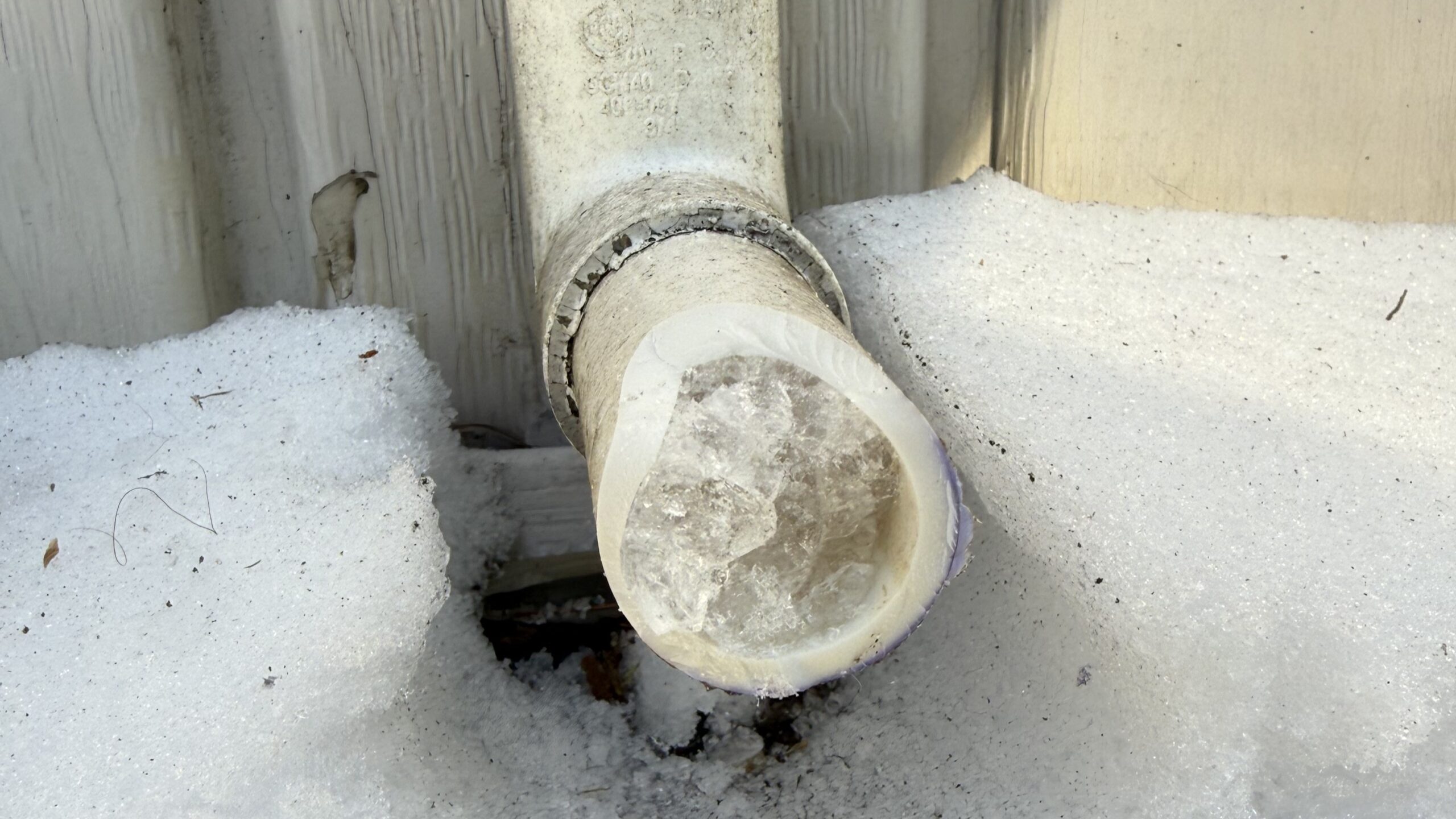
High-efficiency furnaces create condensate. In winter, the drain line can:
- Freeze
- Clog
- Have a pump failure
This is one of those issues that looks small but can shut a system down completely if ignored.
When should I stop troubleshooting and call a pro?
Call a licensed HVAC technician immediately if you have:
- A gas smell or CO alarm
- No heat during sub-freezing temps
- Repeated breaker trips
- Standing water near electrical components
- A system that won’t restart after basic checks
It protects your safety, your equipment, and your warranty—and keeps things code-compliant.
How Princeton Air helps
At Princeton Air, we don’t do panic repairs—we do measured, correct fixes.
In winter emergencies, our priority is to:
- Stabilize the situation
- Identify the root cause
- Fix it properly so it doesn’t happen again
Because we work throughout all of New Jersey, we also factor in:
- Local permitting requirements
- Electrical panel capacity
- System sizing (especially when repairs turn into replacements)
If your system is aging or struggling in cold weather, a consult with a Princeton Air Comfort Advisor can save you from repeat winter surprises.
Bottom Line
- Handle life-safety issues first.
- Try the safe basics.
- Then bring in a licensed pro before small problems turn into frozen, expensive disasters.
And if you’re thinking about upgrading to a cold-climate heat pump, Princeton Air will right-size it and verify performance for real New Jersey winters—not brochure weather.
Frequently Asked Questions
Is no heat always an HVAC emergency?
Yes, no heat in winter is usually considered an HVAC emergency—especially in New Jersey when outdoor temperatures drop near or below freezing. Losing heat can put occupants, plumbing, and the home itself at risk, so it should be addressed as quickly as possible.
Can a dirty air filter really stop my furnace?
Yes, a dirty air filter can stop a furnace from running properly by restricting airflow and triggering safety shutoffs. Replacing a clogged filter is one of the easiest ways to restore heat and prevent unnecessary system damage.
Is it normal for a heat pump to blow cool air in winter?
Yes, it can be normal for a heat pump to blow cooler air during winter defrost cycles. However, if cold air is constant, airflow is weak, or ice continues to build up, the system likely needs professional service.
Should I turn my furnace off if it keeps short cycling?
Yes, you should turn your furnace off if it keeps short cycling to prevent further damage. Short cycling often signals airflow, safety, or control issues that should be diagnosed by a licensed HVAC technician.
What should I do if I smell gas or my carbon monoxide alarm goes off?
If you smell gas or your carbon monoxide alarm goes off, you should leave the home immediately and call 911 and your gas utility from a safe location. Do not re-enter the home until emergency responders confirm it is safe.