When winter storms hit New Jersey, temperatures can drop fast—and so can patience when your home doesn’t feel warm enough. At Princeton Air, serving homeowners across New Jersey, we see a big spike in “no heat” calls during extreme cold. And surprisingly, many of those calls aren’t caused by a broken furnace at all.
They’re caused by space heaters placed too close to thermostats.
This guide explains the proper use of space heaters, how they interact with your home’s heating system, and how to stay warm without accidentally preventing your furnace from doing its job.
Related reading: Why Your Furnace Isn’t Turning On During Cold Weather
How Space Heaters Work (and What They’re Designed to Do)
Space heaters are meant to provide supplemental heat—not replace your home’s central heating system. They warm a small, localized area by heating the surrounding air, which is why they can be useful in drafty rooms or short-term situations.
What they aren’t designed to do:
- Heat your entire home evenly
- Replace a furnace or heat pump
- Run continuously during freezing weather
When used incorrectly, space heaters can actually create new heating problems, especially in New Jersey homes with centrally controlled thermostats.
How Thermostats Read Temperature in Your Home
Most residential HVAC thermostats read the air temperature directly around the device—not the average temperature of your entire home.
That means:
- If the air near the thermostat is warm, the thermostat assumes the house is warm
- The heating system won’t turn on if the thermostat thinks it’s already met the set temperature
This detail becomes critical when a space heater enters the picture.
Can a Space Heater Affect a Thermostat? Yes—Here’s How
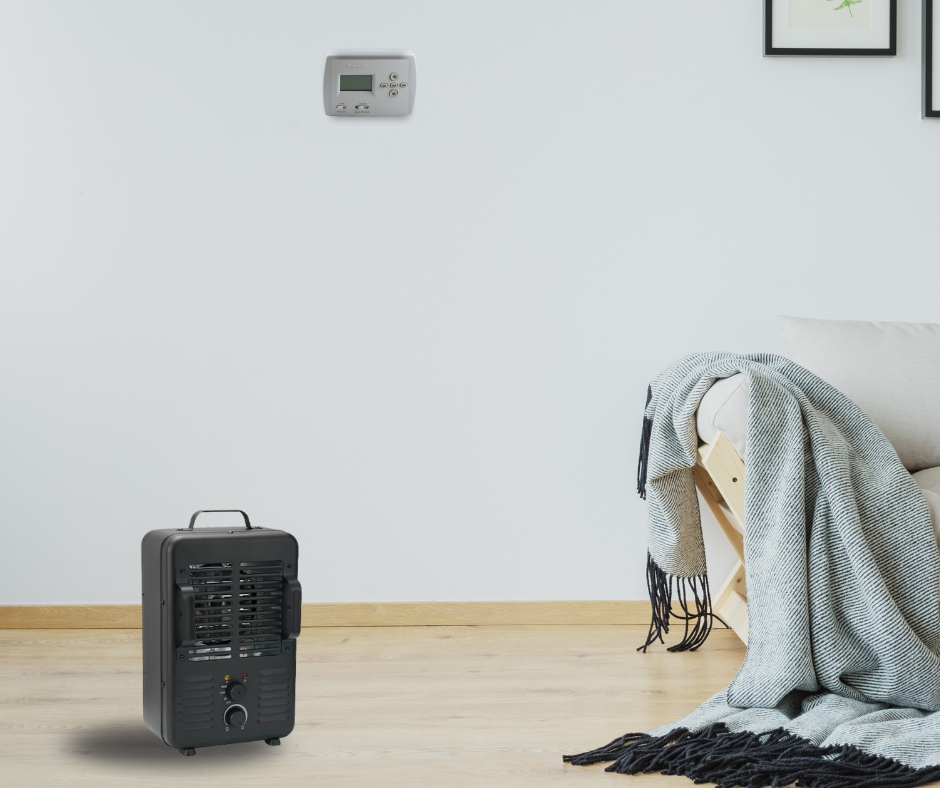
Yes, a space heater can absolutely affect a thermostat.
If a space heater is placed:
- In the same room as the thermostat
- Too close to the thermostat
- Or blowing warm air directly toward it
…the thermostat may read a higher temperature than the rest of the home.
This causes the thermostat to “think” the house is warm—even if bedrooms, hallways, or upper floors are freezing. As a result, your furnace or heating system may never receive the signal to turn on.
This is one of the most common issues Princeton Air sees during cold snaps throughout Central and South Jersey.
Why Your Furnace Isn’t Turning On When a Space Heater Is Running
If your furnace isn’t turning on while a space heater is running, it’s often because:
- The thermostat has reached its target temperature
- The heating system is responding correctly to that reading
- The reading itself is inaccurate due to localized heat
In other words, the furnace isn’t broken—it’s being tricked by the thermostat reading.
No Heat—but the Thermostat Says It’s On? What to Check First
Before assuming a major HVAC problem, check these common issues:
- Is there a space heater running near the thermostat?
- Is the thermostat located in a hallway, living room, or open area where a space heater is operating?
- Does the thermostat display the correct mode (heat, not fan-only)?
- Are some rooms warm while others are cold?
If the answer is yes to the first two questions, repositioning the space heater may immediately restore normal heating operation. Still no heat? Princeton Air offers 24/7 emergency heating services.
Space Heater Safety Tips Every Homeowner Should Follow
Beyond thermostat issues, space heater safety is critical—especially during winter storms when heaters may run longer than usual.
Basic space heater safety tips:
- Never leave a space heater unattended
- Keep heaters away from curtains, furniture, and bedding
- Plug heaters directly into a wall outlet (never a power strip)
- Turn heaters off when sleeping or leaving home
In New Jersey, where homes are often tightly sealed for energy efficiency, improper heater use can increase fire risk and electrical strain.
Where to Place a Space Heater Safely (and Where Not To)
Safe placement matters—for both comfort and safety.
Good placement:
- In rooms without thermostats
- On a flat, stable surface
- Away from high-traffic areas
Avoid placing space heaters:
- Near thermostats
- In hallways or stairwells
- Close to flammable materials
- In bathrooms or damp areas
How Far Should a Space Heater Be from a Thermostat?
As a general rule, a space heater should be kept several feet away from a thermostat—ideally in a different room altogether.
This helps prevent:
- False temperature readings
- Uneven heating
- Furnaces that don’t turn on when they should
If your home relies heavily on space heaters to stay comfortable, it may be time to repair or replace your heating system.
When to Call an HVAC Technician Instead of Using Space Heaters
Space heaters can help temporarily—but they shouldn’t be your long-term solution.
Call a professional HVAC technician if:
- Your home won’t stay warm without space heaters
- Your heating system isn’t responding consistently
- Some rooms never reach the set temperature
- You’re concerned about safety or rising energy costs
Princeton Air provides expert heating service throughout New Jersey. Whether your home has a heat pump, furnace, or boiler, we’ve got your installations and repairs covered.
Frequently Asked Questions
Space Heaters and Thermostats
Can a space heater affect my thermostat reading?
Yes, a space heater can affect your thermostat reading by heating the air around the thermostat. When this happens, the thermostat may think your home is warmer than it actually is and stop calling for heat.
Why does my thermostat say it’s on but my house is still cold?
If your thermostat says it’s on but your house is cold, a nearby space heater may be warming the thermostat area. This can prevent your furnace or heating system from turning on even though other areas of the home are cold.
How far should a space heater be from a thermostat?
A space heater should be kept several feet away from a thermostat and ideally placed in a different room. Keeping space heaters too close to thermostats can cause inaccurate temperature readings and uneven heating.
Can using a space heater stop my furnace from turning on?
Yes, using a space heater near a thermostat can stop your furnace from turning on. If the thermostat senses enough heat from the space heater, it won’t signal the furnace to run.
Are space heaters safe to use during winter storms?
Space heaters can be safe during winter storms if they are used properly. This includes placing them away from flammable materials, never leaving them unattended, and using them only as supplemental heat—not a replacement for your central heating system.
When should I call an HVAC professional instead of using a space heater?
You should call an HVAC professional if your home won’t stay warm without space heaters, your heating system isn’t responding consistently, or you’re concerned about safety, efficiency, or rising energy costs.