If your home was built decades ago—common in Princeton, West Windsor, Hamilton, Montgomery, and across Mercer, Middlesex, Somerset, and Monmouth Counties—your electrical panel may be doing more work than it was designed for. Add Central NJ’s cold winters and humid summers (more heating, cooling, and dehumidification), and many homeowners start asking the same question: Is my electrical panel still safe and sized for today’s home? Or do I need an electrical panel upgrade?
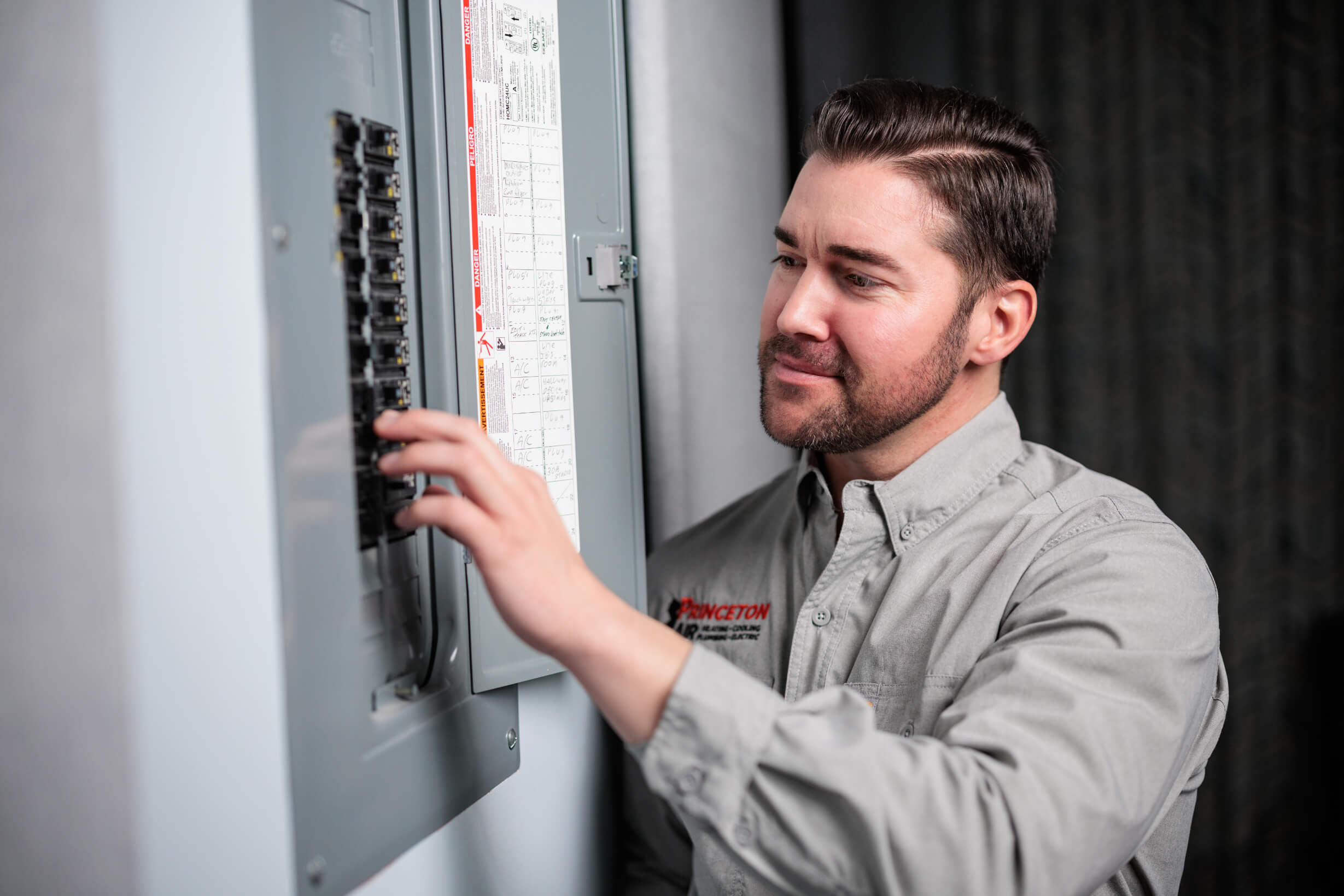
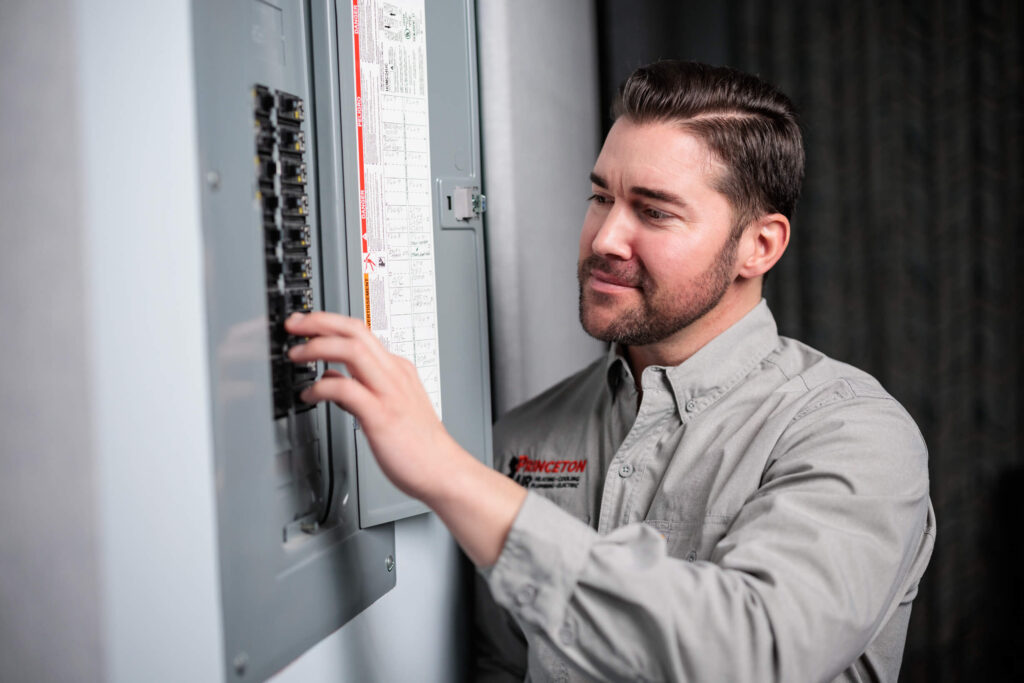
Here’s the clear answer: If you’re seeing frequent breaker trips, signs of heat or corrosion, or you’re planning new loads like EV charging, you should schedule a professional electrical panel inspection.
Princeton Air helps homeowners across New Jersey get a plain-language evaluation of panel safety and capacity—so you can make the next decision with confidence.
Safety note— If you smell burning, see smoke, or hear loud buzzing at the panel, treat it as urgent. Limit use of the affected circuits and have a licensed electrician evaluate it.
Which panel warning signs are true safety issues?
Some symptoms are more than “annoying.” They can point to overheating, arcing, or failing connections.
Watch for these electrical panel safety red flags:
- Breakers that trip repeatedly under normal use (not just during a storm or a one-time overload).
- Burning smell, scorch marks, or melted plastic near breakers or the panel cover.
- Crackling or buzzing from the panel that’s new or persistent.
- Corrosion or moisture around the panel (a common issue in damp basements during humid NJ summers).
- Warmth at the panel or around breakers (without touching internal components).
If any of these are happening, the next step is an inspection—not a workaround. Princeton Air can assess the panel and explain what’s happening in simple terms, including whether this is a electrical repair, a safety correction, or a true electrical panel upgrade.
Is your electrical panel sized for today’s home?
Electrical panel capacity is the panel’s ability to safely handle the power your home uses—now and in the near future.
Many NJ homes were built for lighter electrical demand than what’s typical today. Homeowners often hit capacity limits when they add or plan for:
- EV charging
- Kitchen upgrades (induction cooking, additional circuits)
- Electric heating or cooling upgrades (including heat pumps)
- Work-from-home setups with more devices running at once
These are exactly the kinds of upgrades where the Department of Energy recommends planning for electrical system readiness.
A simple, safe check you can do today (no tools):
- Open the panel door (do not remove the cover) and look for open breaker spaces.
- Notice if you’re depending on extension cords or power strips to “create” outlets—that can be a sign the home needs circuit updates, not just more plugs.
If you’re planning an EV charger or remodel in New Jersey, Princeton Air can perform an electrical panel inspection to confirm what your home can safely support before you buy equipment.
What counts as an old or outdated electrical panel in New Jersey?
An old electrical panel isn’t just about age. It’s about condition, capacity, and whether it’s been stretched beyond its original design.
In older New Jersey homes, it’s common to see:
- Panels with limited circuit space
- Signs of past “patches” to add circuits
- Panels located in basements where moisture can be an issue
A Princeton Air electrician can identify what you have, check for warning signs, and document whether the panel is serviceable—or if replacement is the safer path.
What a Professional Electrical Panel Inspection Should Include
A good inspection should replace uncertainty with a clear plan. At a minimum, expect:
- A review for heat damage, corrosion, and loose connections (using safe testing methods)
- Verification of grounding and bonding
- An assessment of how electrical load is distributed (what’s on which circuits)
- Guidance on whether your upcoming projects fit your current service and panel capacity
An inspection should leave homeowners with a plain-language summary of what’s safe to keep, what needs correction now, and what upgrades will make the home ready for future loads.
Repair vs. electrical panel replacement: what’s realistic?
Sometimes a focused repair solves the problem. Other times, replacement is the safest and most practical option.
A repair may make sense when:
- The panel is in good condition and properly sized
- The issue is isolated (a single breaker, a single circuit, or a specific connection issue)
Electrical panel replacement becomes more likely when:
- There’s heat damage or persistent corrosion inside the panel
- The panel is out of space and you need new circuits
- You’re adding major electrical loads (EV charging, electrification upgrades) and your service/panel can’t support it safely
Do you need a permit in New Jersey for panel work?
In New Jersey, electrical work beyond ordinary maintenance commonly requires a construction permit, and inspections are part of the process under the Uniform Construction Code.
What this means for homeowners in Princeton, West Windsor, Hamilton, Montgomery, and surrounding towns:
- Your electrician should explain the permit pathway and coordinate the required steps.
- Inspections help confirm the work meets safety requirements before the system is fully energized.
Princeton Air can help you understand what the permit and inspection process looks like for your project and township—without burying you in jargon.
Rebates and Incentives: What NJ Homeowners Should Know
New Jersey’s Clean Energy Program and utility programs offer incentives for certain efficiency and electrification improvements, but eligibility and rules change.
Important nuance: A panel upgrade may be a supporting step for other qualifying projects, but the panel itself is not always directly rebated. The safest approach is to confirm current program requirements before you budget.
If you’re planning electrification or efficiency upgrades, Princeton Air can help you sequence the work so you’re not paying twice—first for the project, then later for the electrical capacity to support it.
What does an electrical panel upgrade cost in New Jersey?
Instead of chasing a single number, focus on the cost drivers that matter most:
- Needed service/panel capacity for current and future loads
- Panel location and required working clearance (especially in older basements)
- Grounding/bonding updates
- Permit/inspection steps and documentation
A trustworthy quote should clearly list what’s included (panel, breakers, grounding/bonding corrections, labeling, permits/inspections, and final verification). Princeton Air can provide a written scope so you can compare apples-to-apples if you’re evaluating options.
When to Call a Professional in New Jersey
If you’re seeing safety signs, running out of breaker space, planning new electrical loads, or living with frequent trips, it’s time to get answers.
Princeton Air serves homeowners across New Jersey, with a strong presence in Central NJ communities like Princeton, West Windsor, Hamilton, and Montgomery. We focus on clear communication, code-aware planning, and recommendations you can trust—whether that means a small correction or a full electrical panel upgrade.
Ready for a clear next step?
If you want to reduce uncertainty, start with an electrical panel inspection. Princeton Air will verify safety and capacity, explain options in plain language, and outline a practical path forward—repair, replacement, or a staged upgrade plan. Financing may be available; ask what options apply to your project.
Frequently Asked Questions
What are the biggest signs you need an electrical panel upgrade?
The biggest signs you need an electrical panel upgrade include frequent breaker trips, burning smells, buzzing sounds, visible corrosion, or a panel that has no open breaker spaces. If you’re adding EV charging or electric heating/cooling, a capacity check is smart before you buy equipment.
Does an electrical panel replacement require a permit in New Jersey?
Yes—an electrical panel replacement often requires a permit in New Jersey. New Jersey’s Uniform Construction Code generally requires construction permits for electrical work beyond ordinary maintenance, and inspections are part of the process. Because township steps can vary, confirm the exact submittal process locally.
How do I know if my electrical panel has enough capacity?
You know if your electrical panel has enough capacity by having a licensed electrician review your service rating, existing loads, and what you plan to add—like an EV charger or heat pump. If normal daily use causes breaker trips or lights dimming, that’s a sign to verify the system.
Can you repair an old electrical panel, or do you need to replace it?
You can sometimes repair an old electrical panel, especially if the issue is isolated and the panel is in good condition. But you may need to replace it when there’s heat damage, corrosion, or not enough space for circuits—because those conditions can affect safety and future capacity.
Are rebates available in New Jersey for electrical upgrades?
Yes, rebates may be available in New Jersey for certain electrical upgrades, but eligibility rules change over time and depend on the specific measure and program. If a panel upgrade is needed to support a qualifying electrification project, confirm the current program requirements before budgeting.
What should I do if I smell burning near my electrical panel?
If you smell burning near your electrical panel, treat it as a safety issue. Stop using the affected circuits if you can do so safely, and have a licensed electrician evaluate the panel and connected wiring. If you see smoke or active sparking, move to safety and contact emergency services.