

A warm home, a busy kitchen, and family around the table make Thanksgiving special. A backed-up kitchen sink can change the mood pretty quickly.
Thanksgiving meal preparation puts drains and garbage disposals through unusually heavy use. Add visiting family and friends, and bathroom plumbing gets a workout, too.
Before Thanksgiving arrives, New Jersey homeowners can take a few simple steps to help prevent clogged drains and plumbing backups.
Listen to What Your Drains Are Telling You
Plumbing often provides warning signs before a complete backup occurs.
Before Thanksgiving, look and listen for:
- Water draining more slowly than normal
- Gurgling from a sink or toilet
- Recurring kitchen clogs
- Unpleasant drain odors
- A toilet reacting when another fixture runs
- Water backing up into a tub or shower
- Several drains slowing simultaneously
A single slow fixture may have a localized clog. Several slow fixtures point to an issue deeper within the drainage system. Schedule a drain inspection before the holidays
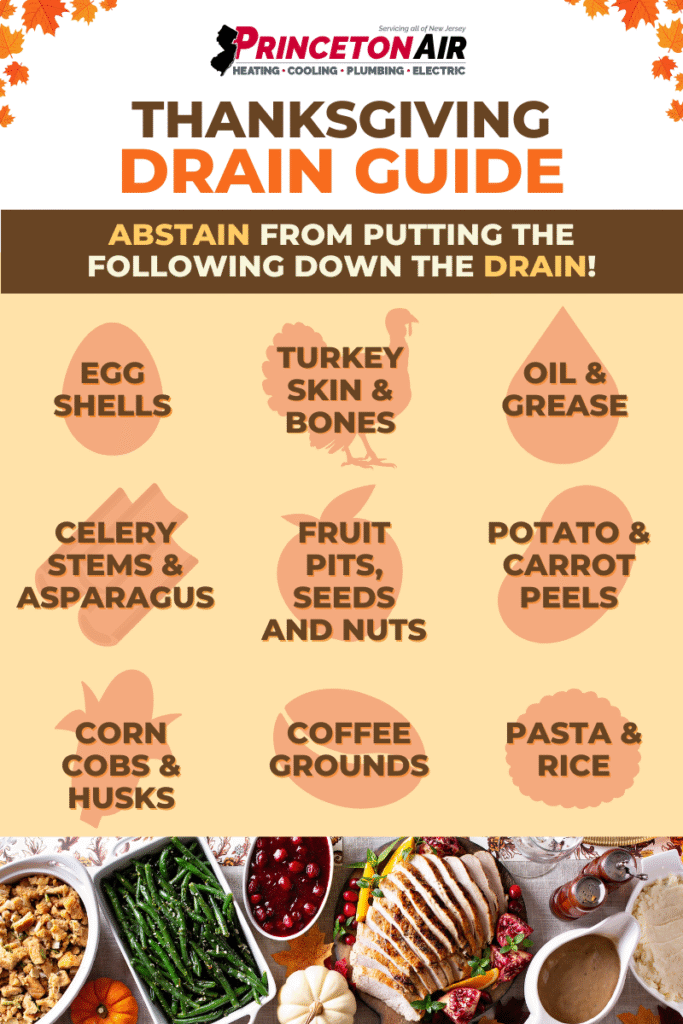
Keep Fats, Oils, and Grease Out of the Drain
Turkey drippings and cooking grease shouldn’t be poured down your kitchen sink.
Grease can collect on pipe walls, narrowing the space available for water and helping other debris stick inside the line.
Instead:
- Allow grease to cool.
- Collect it in a container.
- Dispose of the sealed container in the trash.
- Wipe greasy pans before washing them.
Your gravy gets the turkey drippings. Your drain doesn’t.
Be Selective About What Goes Into the Disposal
Garbage disposals are useful, but they aren’t designed to process every Thanksgiving leftover.
Keep these foods out:
- Bones: Too hard for the disposal.
- Turkey skin: Fatty and better suited for the trash.
- Potato peels: Starchy material can contribute to buildup.
- Pasta and rice: Both can absorb water and expand.
- Celery and fibrous vegetables: Fibers can create disposal problems.
- Coffee grounds: Fine particles can accumulate inside drain lines.
Scrape dishes thoroughly before rinsing them and use a sink strainer to catch smaller pieces.
Give Your Garbage Disposal Room to Work
When you use the disposal, turn on cold water first.
Add small quantities of appropriate scraps gradually and let the disposal finish processing them. Keep the water flowing briefly afterward.
Trying to force a large amount of food through the disposal during Thanksgiving cleanup can create exactly the problem you’re trying to avoid.
Prepare Guest Bathrooms, Too
Thanksgiving plumbing problems don’t always begin in the kitchen.
Make sure bathroom trash cans are visible and accessible so guests aren’t tempted to flush things that belong in the trash.
Toilets should be reserved for human waste and toilet paper. Wipes, paper towels, cotton products, and personal hygiene items should be thrown away.
Know When a Clog Could Be Something More
Sometimes a clog is simply a clog. Other times, recurring drainage problems can indicate buildup or a problem farther into the line.
Professional attention may be appropriate when:
- The same drain repeatedly clogs.
- Multiple fixtures drain slowly.
- A toilet gurgles when another fixture runs.
- Wastewater backs up into another drain.
- You notice sewage odors.
- A main drain or sewer line repeatedly backs up.
Depending on the cause and condition of the pipe, professional solutions can include mechanical drain clearing, hydro jetting, or camera inspection.
What Should You Do During a Thanksgiving Backup?
Stop using the affected fixture first.
Continuing to run water can make a backup worse and potentially lead to an overflow.
Avoid relying on repeated chemical drain treatments for a recurring problem. A persistent clog is worth diagnosing so you know what’s actually happening inside the line.
Your Pre-Thanksgiving Plumbing Checklist
Before guests arrive:
- Check sinks and tubs for slow drainage.
- Test the garbage disposal.
- Put a strainer in the kitchen sink.
- Prepare a container for cooking grease.
- Scrape dishes before rinsing.
- Keep bones, peels, starches, and fibrous scraps out of the disposal.
- Keep non-flushable products out of toilets.
- Address recurring drain issues before Thanksgiving Day.
Give Your Drains Some Attention Before the Holiday
If a drain has been giving you warning signs, don’t wait until Thanksgiving dinner to find out how serious the problem is.
Princeton Air provides professional drain cleaning throughout New Jersey. Our licensed plumbers can evaluate the problem and determine whether mechanical clearing, hydro jetting, camera inspection, or another solution is appropriate.
A little preparation now can help you spend Thanksgiving around the table instead of worrying about what’s happening under the sink.
Schedule drain cleaning with Princeton Air before the holiday rush hits
Frequently Asked Questions
About Thanksgiving Drain & Plumbing Problems
What should you not put down a garbage disposal on Thanksgiving?
Avoid putting turkey bones and skin, potato peels, pasta, rice, celery and other fibrous vegetables, coffee grounds, fats, oils, grease, and large amounts of leftovers into your garbage disposal. Scrape plates into the trash or compost before rinsing them and use the disposal only for small amounts of appropriate food residue.
Can you pour turkey grease down the kitchen drain?
No. Turkey grease, drippings, cooking oil, melted butter, and other fats should stay out of your kitchen drain. Grease can collect along the inside of pipes and trap food particles and other debris, contributing to clogged drains. Let the grease cool, transfer it to a disposable container, and place it in the trash.
How can I prevent a clogged drain on Thanksgiving?
Scrape dishes before rinsing them, use a sink strainer, and keep grease and problem foods out of the drain and garbage disposal. It’s also a good idea to address slow or frequently clogged drains before Thanksgiving. A drain that’s already struggling may be more likely to back up when holiday cooking and cleanup increase its workload.
Should you run hot or cold water with a garbage disposal?
Use cold water while operating your garbage disposal. Add appropriate food residue gradually rather than overloading the unit, and keep the water running briefly after the disposal finishes grinding. Never put your hand inside a garbage disposal, even if the unit appears to be turned off.
Why does my kitchen drain keep clogging?
Recurring kitchen clogs can result from grease, food particles, soap residue, or other buildup inside the drain line. If you keep clearing the same clog only for it to return, there may be a deeper restriction that needs professional attention. Professional drain cleaning can help determine the appropriate way to clear the blockage.
What does it mean when multiple drains are backing up?
When several drains become slow or back up around the same time, the problem may be farther down the drainage or sewer system rather than isolated to one sink. Gurgling toilets, sewage odors, or wastewater appearing in a tub or shower can also indicate a larger issue. A licensed plumber can evaluate the system and determine where the problem is occurring.
When might hydro jetting be needed for a clogged drain?
Hydro jetting may be considered when stubborn buildup is restricting a drain or sewer line and the condition of the plumbing makes this method appropriate. It uses high-pressure water to remove buildup from inside the pipe. A plumbing professional should evaluate the line first to determine whether hydro jetting is suitable for the specific problem.
How can a camera inspection help diagnose recurring drain problems?
A sewer or drain camera inspection allows a plumber to look inside certain drain and sewer lines to help identify the source and location of a problem. Depending on the situation, an inspection may reveal buildup, an obstruction, pipe damage, or another condition contributing to recurring backups.
What should I do if my kitchen sink backs up on Thanksgiving?
Stop using the affected sink and avoid running additional water into the drain. If you have a double-basin sink, remember that both sides may share the same drain line. A minor clog may respond to a plunger, but recurring backups, multiple affected fixtures, or signs of a sewer-line problem should be evaluated by a plumbing professional.
When should I call a plumber for a clogged drain?
Consider calling a plumber when a clog keeps returning, multiple fixtures drain slowly, you hear frequent gurgling, notice sewage odors, or wastewater backs up into another fixture. If you’re already experiencing these warning signs before Thanksgiving, scheduling service ahead of the holiday can help address the underlying problem before your home sees additional cooking and guest traffic.
Princeton Air provides professional drain cleaning throughout New Jersey. Our licensed plumbers can evaluate recurring drain problems and determine whether drain clearing, hydro jetting, camera inspection, or another solution is appropriate.