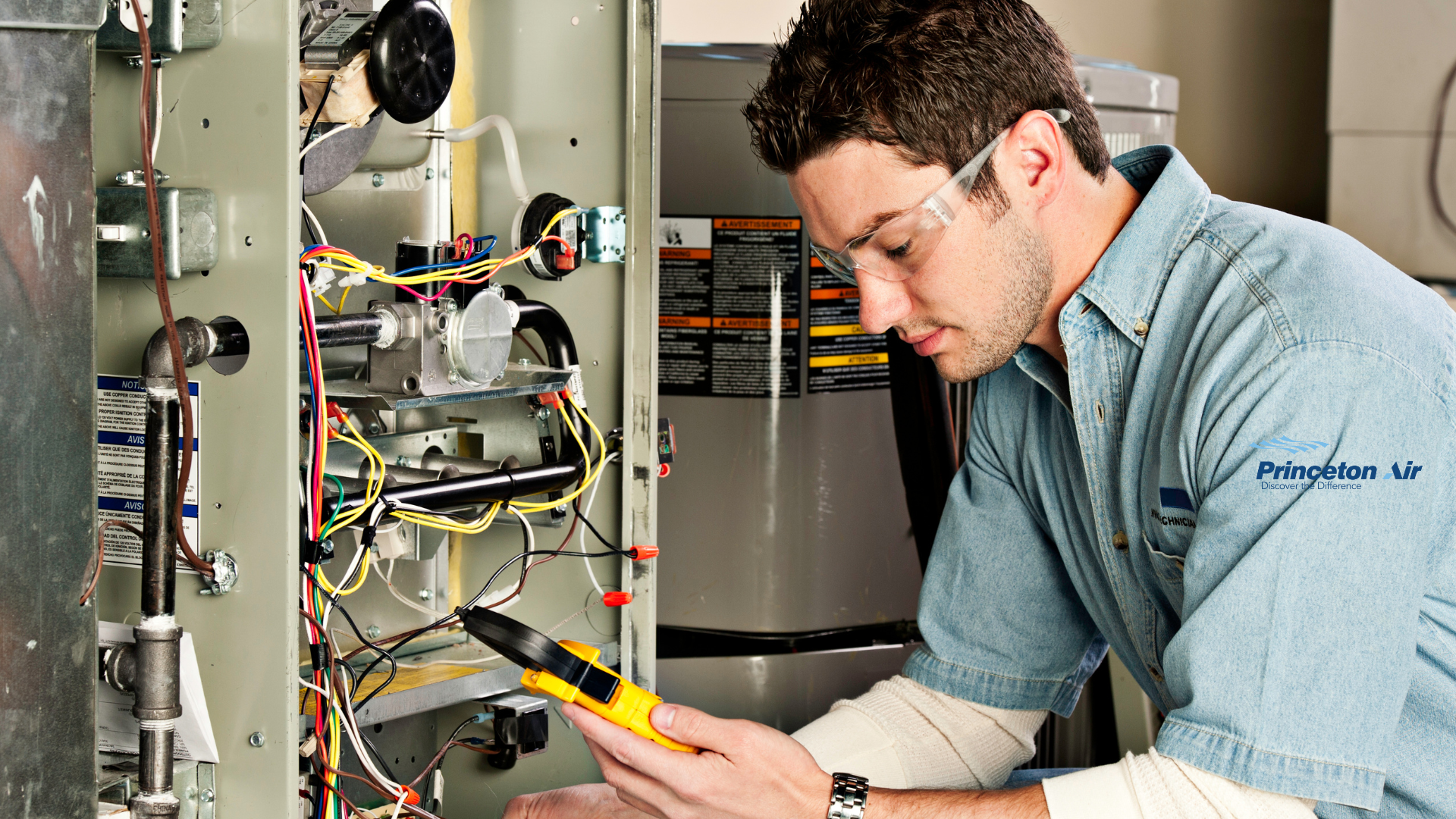
A commercial HVAC problem does not automatically call for new equipment. If the issue is isolated and the system remains dependable, repair may be the sensible choice. Replacement deserves a more serious look when breakdowns are becoming frequent, major repairs are accumulating, or the existing system is no longer serving the building effectively.
For New Jersey facility managers and commercial property owners, the decision to repair vs. replace a commercial HVAC system is best made by looking beyond a single service call.
Equipment condition, repair history, downtime, system performance, future building requirements, and the cost of continued ownership all belong in the conversation.
When Does Commercial HVAC Repair Still Make Sense?
HVAC repair can be a sound choice when the failure is contained and the equipment remains reliable overall.
A commercial HVAC technician should first determine what failed, whether another condition contributed to the problem, and what the system is likely to need after the repair.
Repair may make sense when:
- the failure appears isolated;
- major components remain in serviceable condition;
- appropriate replacement parts remain available;
- the equipment continues to meet the building’s heating and cooling needs;
- maintenance history has been consistent; and
- the proposed repair is likely to restore dependable operation.
A failed motor or control component on otherwise stable equipment presents a very different decision from another major repair on a system that has already experienced several unrelated failures.
What Signs Make Replacement Worth Evaluating?
HVAC replacement becomes more important to consider when the equipment is developing a pattern of problems rather than experiencing one repairable failure.
Watch for signs such as:
- increasingly frequent service calls;
- different major components failing over a relatively short period;
- recurring comfort or temperature-control issues;
- repairs that restore operation without restoring confidence in the system;
- difficulty obtaining compatible parts;
- controls that no longer support the building’s needs;
- major equipment deterioration; or
- repeated HVAC downtime affecting normal operations.
The American Society of Heating, Refrigerating and Air-Conditioning Engineers (ASHRAE) notes that HVAC equipment can reach the end of its economic service life for several reasons beyond total failure. Reduced reliability, excessive maintenance costs, obsolescence, and changing system requirements can all affect the decision.
That distinction is important. Equipment can technically remain operational while becoming less practical to own.
Is Equipment Age Enough to Decide?
Age should inform the decision, not dictate it.
Commercial HVAC systems vary widely. Rooftop units, boilers, heat pumps, air handlers, controls, pumps, and other equipment do not share one universal service life.
ASHRAE’s current public database includes service-life information across tens of thousands of pieces of HVAC equipment, reflecting the variety of systems and operating conditions found in real buildings.
Instead of asking only, “How old is the unit?” ask:
How reliably is this equipment performing today, and what is likely to be required to keep it useful?
An older system with a stable maintenance history may present a very different decision from newer equipment experiencing repeated failures.
When Do Repair Costs Begin to Point Toward Replacement?
There is no universal repair-cost percentage that determines when every commercial HVAC system should be replaced.
Project scope varies too much for a simple formula. Equipment type, access, building size, controls, electrical work, ductwork, piping, replacement logistics, and operational requirements can all affect the comparison.
A stronger review considers:
- The current repair. Is the problem limited or does it involve a major component?
- Recent spending. Is this repair unusual, or is it part of a growing pattern?
- Likely future repairs. Are other major components showing wear or deterioration?
- Operational consequences. What happens if the system fails again?
- Replacement scope. Would new equipment require related controls, electrical, ventilation, ductwork, or other modifications?
- Remaining usefulness. Will the repaired equipment still meet the building’s expected needs?
This turns the discussion from “repair invoice versus replacement proposal” into a broader lifecycle decision.
If a substantial repair is already under consideration, Princeton Air’s commercial HVAC repair and maintenance services can help provide the system information needed to compare practical next steps.
How Should Downtime Affect the Decision?
Downtime belongs in the calculation because commercial HVAC failures can affect much more than temperature.
Depending on the facility, an outage may affect:
- employees and customers;
- tenants;
- occupied work areas;
- operating schedules;
- temperature-sensitive spaces;
- business continuity; or
- staff time spent coordinating repeated service.
A lower-cost repair can become less attractive when similar failures repeatedly interrupt operations.
ENERGY STAR notes that effective commercial building operation and maintenance can reduce the risk of early equipment failure and unscheduled downtime while supporting occupant comfort.
This makes good maintenance valuable for two reasons. It can support system performance, and it creates a documented history that helps facility managers recognize a changing reliability pattern.
Could a Retrofit or Phased Upgrade Be the Better Path?
Commercial HVAC decisions are not always limited to repairing everything or replacing everything.
A building may contain multiple pieces of equipment installed at different times. One unit may be reaching the end of its practical service life while another remains in good condition.
A phased plan can separate equipment into categories such as:
- continue operating;
- repair now;
- monitor more closely;
- update controls or related components; and
- prioritize for future replacement.
Princeton Air offers HVAC system retrofits as well as new installations, maintenance, ductwork, and control systems.
That creates room for a more measured capital strategy when the entire facility does not need to change at once.
Has the Building Changed Since the System Was Designed?
A commercial HVAC system needs to serve the building as it operates today.
Over time, a property may experience:
- renovations;
- tenant changes;
- new occupancy patterns;
- longer operating hours;
- additional equipment loads;
- space reconfiguration;
- different zoning needs; or
- new ventilation and comfort requirements.
In those cases, repairing existing equipment may restore operation without addressing whether the system still fits the facility.
This is where Princeton Air’s broader commercial approach can be useful. Its current service offerings include not only heating and cooling equipment but also ventilation, ductwork, controls, and system retrofit work.
For New Jersey facilities with changing space requirements, replacement planning should consider the building and HVAC system together.
How Should New Jersey’s Seasons Affect the Decision?
New Jersey commercial HVAC systems need to handle meaningful heating and cooling demand over the course of the year.
Cold winters, humid summers, and shoulder-season temperature swings can all place different demands on equipment.
That does not mean an older system should automatically be replaced before a new season. It does mean facility managers should consider the timing and consequence of a potential failure.
If service history already shows declining reliability, a planned evaluation before peak heating or cooling demand can provide more options than making the same decision after an unexpected breakdown.
What Should Facility Managers Ask Before Approving a Major Repair?
Before committing to a major repair or replacement, ask enough questions to understand what each option actually solves.
Useful questions include:
- What failed?
- Is this an isolated problem or part of a larger pattern?
- What condition are the other major components in?
- Are replacement parts readily available?
- What has the equipment required over the last few years?
- Does the existing system still meet the facility’s needs?
- Are controls or related systems contributing to the problem?
- What additional work would replacement require?
- Could replacement be phased?
- How could each option affect downtime?
- What foreseeable work remains after the proposed repair?
A repair extends the use of existing equipment. Replacement begins a different equipment lifecycle.
The right choice depends on what each option realistically provides the building.
Make the Commercial HVAC Decision with the Full Picture
A strong repair-versus-replacement decision is based on more than equipment age or one repair estimate.
Review system condition, maintenance history, reliability, downtime, building requirements, foreseeable repairs, and replacement scope together. That provides a clearer basis for deciding whether continued repair, retrofit, phased planning, or replacement makes the most sense.
If your HVAC system is becoming more unreliable, schedule commercial HVAC service with Princeton Air to evaluate the equipment and review your options.
Frequently Asked Questions
Is it better to repair or replace a commercial HVAC system?
Whether to repair or replace a commercial HVAC system depends on equipment condition, reliability, repair history, parts availability, and the building’s needs. An isolated failure may be worth repairing when the rest of the system remains dependable. Replacement deserves closer consideration when breakdowns are becoming frequent or major repairs are accumulating. Princeton Air’s commercial HVAC services support both repair and system-planning needs for New Jersey businesses.
How do I know when a commercial HVAC system should be replaced?
A commercial HVAC system may deserve replacement consideration when reliability is declining, major components are deteriorating, repairs are becoming more frequent, parts are difficult to obtain, or the system no longer fits the building.
ASHRAE identifies reduced reliability, excessive maintenance costs, obsolescence, changing system requirements, and failure among the factors that can end an HVAC system’s economic service life. No single factor should automatically determine the choice.
How long does a commercial HVAC system last?
Commercial HVAC system lifespan varies by equipment type, use, maintenance, operating conditions, and application. Rooftop units, boilers, controls, pumps, air handlers, and other equipment should not all be assigned one universal lifespan.
ASHRAE maintains a service-life database covering tens of thousands of pieces of HVAC equipment, illustrating why equipment-specific evaluation is more useful than one blanket age rule.
Should commercial HVAC equipment be replaced just because it is old?
Older commercial HVAC equipment does not automatically require replacement. Age is useful context, but condition, reliability, repair frequency, parts availability, maintenance history, and current building requirements should also be considered.
An older system that remains dependable may present a different decision from younger equipment experiencing repeated failures.
Do frequent HVAC repairs mean a commercial system needs replacement?
Frequent commercial HVAC repairs are a reason to evaluate replacement, but they do not automatically make replacement necessary. Facility managers should review which components are failing, how often breakdowns occur, whether future repairs are foreseeable, and what equipment downtime means operationally.
A documented service history from regular commercial HVAC maintenance can make those trends easier to identify.
Can commercial HVAC equipment be upgraded without replacing everything?
Commercial HVAC equipment can sometimes be improved through targeted repairs, system retrofits, controls work, or phased replacement rather than replacing every component at once. The appropriate project scope depends on the existing system and building.
Does commercial HVAC maintenance affect the repair-versus-replacement decision?
Commercial HVAC maintenance history can provide useful evidence when deciding between repair and replacement. Records can reveal whether equipment performance is stable or whether service needs are becoming more frequent.
ENERGY STAR notes that effective O&M can reduce the risk of early equipment failure and unscheduled downtime. Maintenance therefore supports both system performance and better lifecycle planning.
How should HVAC downtime affect replacement planning?
Commercial HVAC downtime should be considered because a failure may affect occupants, tenants, customer areas, business schedules, or temperature-sensitive operations.
The impact will vary by building, so facility managers should compare the cost and disruption of repeated failures with the scope of repairing or replacing the equipment. That provides a broader view than looking at repair price alone.