A frozen pipe can turn a cold weather inconvenience into a plumbing repair quickly. Water expands as it freezes, which can put enough pressure on a pipe or connection to cause damage. Pipes along exterior walls and in garages, crawl spaces, basements, attics, and other poorly heated areas deserve extra attention before New Jersey temperatures fall sharply.
For homeowners throughout New Jersey, the practical goal is simple: keep vulnerable plumbing warmer, reduce cold air exposure, and know what to do if water flow suddenly drops.
Why do pipes burst during winter?
Pipes can burst because freezing water expands and increases pressure within the plumbing system. The pipe does not have to be weak or old for freezing conditions to create a problem. Both the location of the pipe and how much cold reaches it matter.
Common vulnerable locations include:
- pipes running along exterior walls;
- plumbing in unheated garages;
- crawl-space or basement supply lines;
- attic plumbing;
- outdoor hose connections; and
- pipes beneath sinks where cold air reaches the wall cavity.
New Jersey homes include a mix of older properties and newer construction, so the location and insulation around plumbing can vary significantly from house to house. A line tucked into an older exterior wall in Mercer County, for example, may face different winter exposure than plumbing routed through conditioned space in a newer home.
What plumbing issues tend to appear during cold weather?
Reduced water flow, frozen sections, leaks, and damaged pipes are the main cold weather plumbing concerns homeowners should watch for. A faucet that suddenly produces only a trickle can be a sign that part of the supply line has frozen.
Cold weather warning signs can include:
- little or no water from a faucet;
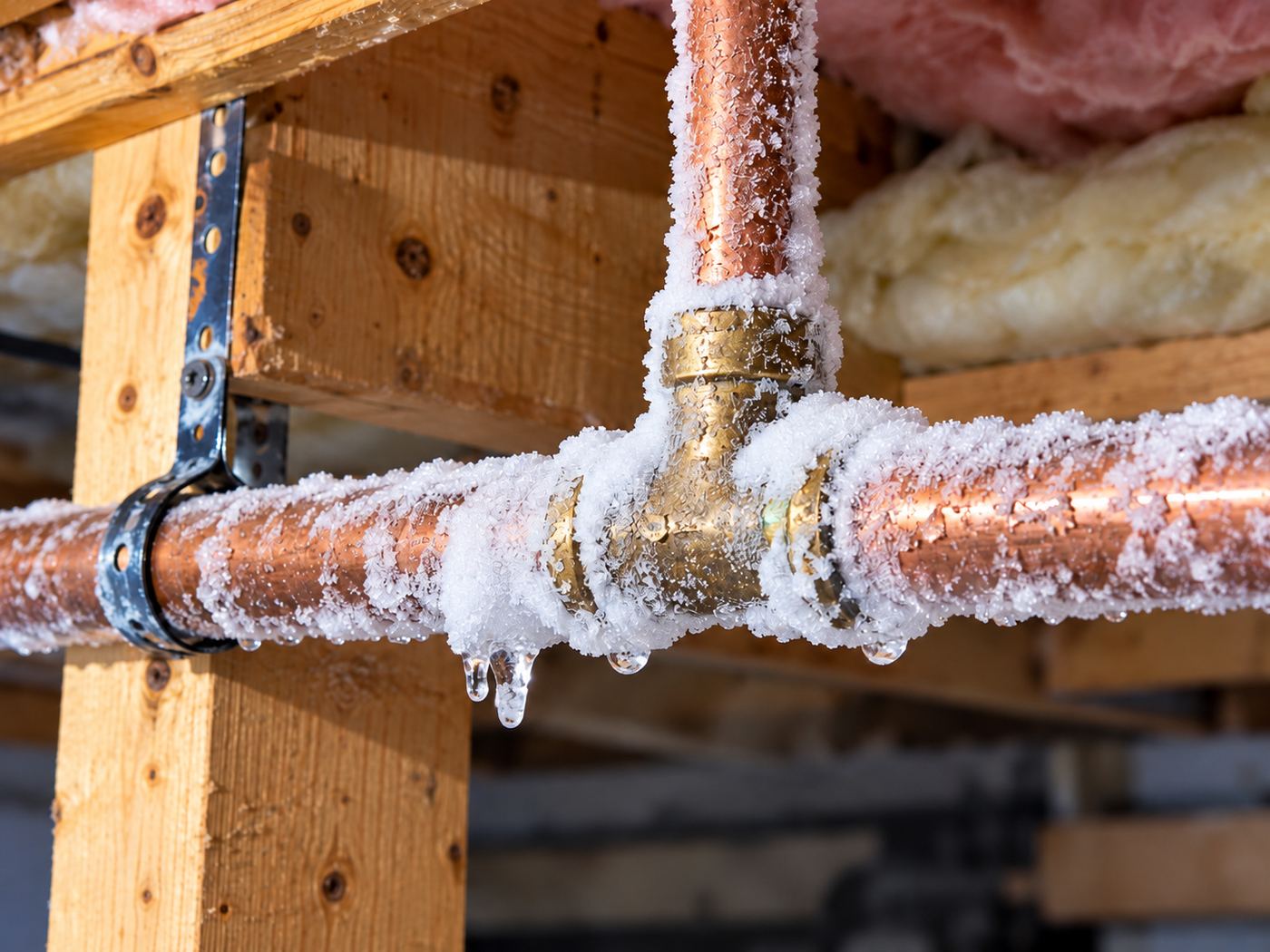
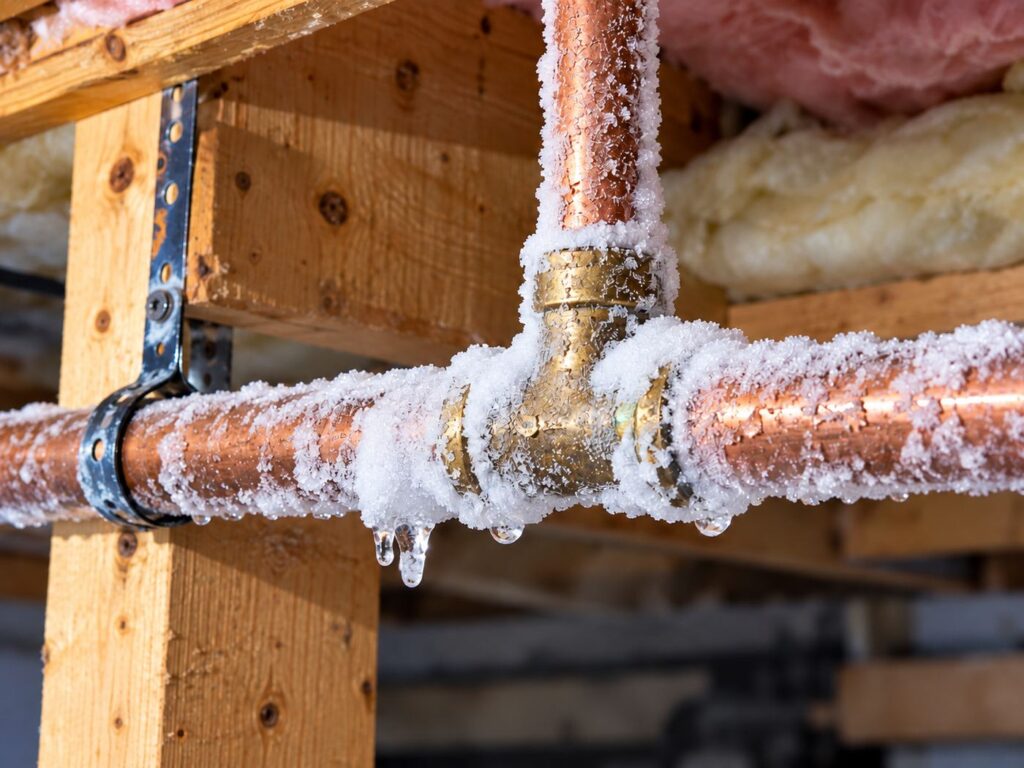
- an exposed pipe with visible frost;
- unusual bulging or cracking;
- water appearing near a wall, ceiling, cabinet, or basement area; or
- water continuing to move after fixtures are shut off.
Some signs indicate a possible active leak rather than simply a frozen line. If water is escaping, locate the home’s main water shutoff when it is safe to do so and arrange plumbing service with Princeton Air.
What can homeowners safely check before calling a plumber?
Homeowners can check water flow, exposed plumbing, heating conditions, and accessible cold areas without opening walls or attempting risky repairs.
Start with a few basic checks:
- Test nearby faucets. If one fixture has very low flow while others work normally, a localized frozen section may be involved.
- Look at accessible pipes. Check plumbing near exterior walls, under sinks, and in garages or unfinished areas.
- Open sink cabinets. This can allow warmer room air to circulate around plumbing near exterior walls.
- Keep garage doors closed. This is especially important when water lines pass through the garage.
- Know the main water shutoff location. It’s important to know how to shut off your home’s water if a pipe breaks.
Safety note: do not use a blowtorch, propane heater, kerosene heater, charcoal stove, or other open flame to thaw plumbing. The Red Cross recommends safer methods such as an electric heating pad, hair dryer, or warm towels on an accessible frozen section.
If the frozen section is inaccessible or you cannot safely restore flow, that’s where Princeton Air can help.
How can homeowners prevent frozen pipes?
The most effective prevention strategy is to keep vulnerable plumbing insulated, limit exposure to freezing air, and maintain enough indoor heat during severe cold.
Before a winter cold snap:
- remove and drain outdoor hoses;
- follow proper winterization procedures for outdoor water lines;
- insulate accessible pipes in unheated spaces;
- seal obvious cold-air pathways around plumbing where appropriate;
- keep garage doors closed when plumbing runs through the garage; and
- open sink cabinets during severe cold so warmer air can reach nearby pipes.
During very cold weather, the Red Cross also advises letting cold water drip from a faucet supplied by an exposed pipe. Moving water, even at a trickle, can help reduce the chance of freezing.
If you’ll be away during cold weather, leave the heat on and set the thermostat no lower than 55°F.
Not sure which pipes in your home are most exposed? Schedule an inspection with Princeton Air before winter conditions become severe
When should a frozen or burst pipe be handled professionally?
Call a plumber when you cannot locate, access, or safely thaw the frozen section, water is leaking, a pipe appears damaged, or normal flow does not return.
Professional service also makes sense when:
- the pipe is behind a finished wall or ceiling;
- a fitting or section of pipe has split;
- water has reached electrical equipment;
- more than one part of the plumbing system appears affected; or
- the same section freezes repeatedly.
Should a damaged pipe be repaired or replaced?
The decision to repair or replace damaged pipes depends on the location and extent of the damage rather than the winter freeze alone.
A plumber may be able to repair a localized damaged section. More extensive work may make sense when damage affects multiple fittings, inaccessible piping, or a section with repeated freeze exposure.
Those repair-versus-replacement factors should be confirmed during an on-site plumbing assessment.
Just as important, the underlying freeze exposure should be addressed. Replacing a damaged section without correcting a recurring cold air or insulation problem may leave the same location vulnerable during another cold spell.
What affects the cost of burst pipe service?
Burst pipe costs vary with the scope of damage, access to the pipe, materials involved, and any related restoration work.
Potential cost drivers include:
- whether the affected pipe is exposed or behind a finished surface;
- how much piping or how many fittings require repair;
- the pipe material and size;
- whether the water can be isolated easily;
- whether additional plumbing problems are discovered; and
- whether water has damaged surrounding finishes.
What should New Jersey homeowners do before the next cold snap?
Focus first on exposed plumbing, unheated spaces, outdoor connections, and knowing where the main water shutoff is located.
New Jersey winters can bring freezing conditions that expose weak points in plumbing located near the building envelope. Before temperatures fall:
- inspect visible pipes in cold areas;
- insulate vulnerable accessible lines;
- disconnect and winterize outdoor plumbing;
- keep heat reaching plumbing near exterior walls;
- know how to shut off the home’s water; and
- get professional help when a pipe is inaccessible, damaged, or repeatedly freezes.
Frozen pipe prevention starts before the coldest night. If you see warning signs or want help evaluating vulnerable plumbing, schedule plumbing service with Princeton Air today
Frequently Asked Questions
Why do pipes burst in winter?
Pipes can burst in winter because water expands when it freezes and increases pressure within the plumbing system. Pipes along exterior walls and in unheated spaces are often more exposed to severe cold. Insulation and maintaining warmer conditions around vulnerable plumbing can help reduce freezing risk.
What are the signs of a frozen pipe?
Signs of a frozen pipe can include little or no water coming from a faucet, especially during freezing weather. Visible frost on an accessible pipe can also warrant attention. If you notice leaking water, a damaged pipe, or an inaccessible frozen section, arrange professional plumbing help.
How can New Jersey homeowners prevent pipes from freezing?
New Jersey homeowners can help prevent frozen pipes by insulating exposed plumbing, reducing cold-air exposure, and maintaining indoor heat during severe cold. The Red Cross also recommends opening sink cabinets, keeping garage doors closed when plumbing passes through them, and allowing a small trickle from faucets served by exposed pipes during very cold weather.
Does letting a faucet drip help prevent frozen pipes?
Letting cold water drip from a faucet served by exposed plumbing can help reduce the chance of freezing during very cold weather. The goal is to keep water moving through the vulnerable section. Dripping a faucet is one prevention measure, not a substitute for insulation and proper winter preparation.
What should I do if a pipe freezes?
If a pipe freezes, keep the affected faucet open and use only safe, controlled heat on an accessible section. The Red Cross lists methods such as an electric heating pad, hair dryer, or towels soaked in hot water and warns against open-flame devices. If the frozen section cannot be located or safely reached, call a licensed plumber.
Should I turn off the water if a pipe bursts?
If a pipe bursts and water is escaping, knowing how to shut off the home’s water supply can help limit continued water flow when it is safe to reach the valve. The National Weather Service recommends knowing how to shut off your water in case a pipe breaks. Arrange professional plumbing service after the immediate flow is controlled.