
Water Heater Maintenance in New Jersey
Trusted Water Heater Maintenance in New Jersey
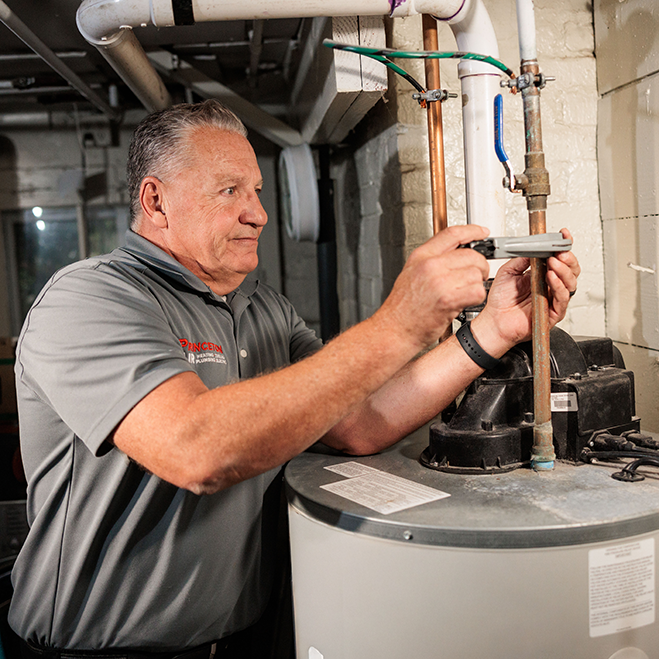
Annual Care for the Tank That Delivers Hot Water to the Whole Home
A tank water heater is the most quietly hardworking piece of equipment in the house. Annual maintenance is how it keeps working that way.
A conventional tank water heater holds forty to eighty gallons of hot water and cycles its burner or elements to keep that water at temperature every hour of every day. That constant operation, combined with the mineral content of New Jersey water, produces the slow accumulation of sediment, the gradual consumption of the anode rod, and the subtle component wear that determines whether the unit reaches its full twelve-to-fifteen year service life or fails well before it.
Princeton Air’s licensed plumbers have been servicing tank water heaters across New Jersey for more than 50 years. Schedule your water heater maintenance with Princeton Air today.
A Plumbing Team That Knows the Water Heaters in Older Homes
Water heater maintenance draws on experience with the specific brands and vintages of equipment installed across a region, and New Jersey has decades of variety to draw from.
Our licensed plumbers have serviced tank water heaters installed across New Jersey for years, including units in homes across East Windsor, Hightstown, Lawrence Township, Pennington, and Trenton.
Our team has worked on gas and electric units from every major brand, and we know how each generation of water heater ages in the water conditions homeowners in the region actually have to deal with.



50+
Years in Business
700
Skilled Employees
24/7
Emergency Service
500
Trucks on the Road
What Regular Water Heater Maintenance Does for Your Home
A water heater rarely fails without warning. Annual maintenance is the moment when those warnings are noticed and acted on, rather than missed.
Tank water heaters are simple equipment, which is part of why they are usually reliable. They are also unforgiving of neglect, because the slow processes that degrade them run continuously regardless of whether anyone is paying attention. Annual care is how those processes are managed.
Every tank water heater accumulates sediment at the bottom, composed of mineral deposits that settle out of the water as it is heated. Over years, that sediment layer can become several inches deep, which reduces the tank’s usable capacity, insulates the burner from the water it is trying to heat, and produces the popping or rumbling sounds older water heaters develop. Annual flushing removes that sediment before it becomes enough to affect operation or to damage the tank itself.
Every tank water heater has a sacrificial anode rod inside it, designed to corrode in place of the tank’s steel lining. That rod is the single most important component for preventing tank failure, and it is also the component most frequently ignored across the life of a unit. Annual inspection lets us see how much of the anode has been consumed and replace it when it is near end of life, which is the work that most directly extends the tank’s working years.
The gas burner and thermocouple on a gas unit, or the heating elements and thermostats on an electric unit, determine how effectively the water heater delivers its rated performance. Annual inspection catches early signs of burner issues on gas units or element decline on electric ones, both of which are simpler to address during a scheduled visit than during a failure.
The T&P valve is a critical safety component that relieves pressure if the tank ever becomes overheated or overpressurized. Those events are rare, but the valve has to function if one occurs, and the valve does not get tested through normal operation. Annual verification is the only routine point at which a homeowner knows the valve will work if it is needed.
Most residential tank water heaters are designed for ten to fifteen years of service. Maintained units reach the top of that range, and premium tanks with diligent anode replacement can sometimes exceed it. Neglected tanks often fail at eight to ten years, usually through internal corrosion that could have been prevented with anode rod attention at the right points in the unit’s life.
What Our Customers Are Saying
100% Satisfaction Guarantee


Savings You Can Count On
Take advantage of our current offers & coupons!

Easy as 1, 2, 3.
Prices as low as $123/month
with Princeton Air and New Jersey rebates and financing programs
Join the Princeton Air Home Comfort Club
Taking care of your home is easier when someone is taking care of it with you.
The Princeton Air Home Comfort Club is a whole-home membership built around four pre-scheduled maintenance visits each year, so the systems you rely on stay in peak condition through every season.
Members receive a discount on service work, credits toward future installations, priority scheduling during the busiest times of year, no dispatch fees when work is performed, and our 24-hour emergency service guarantee. It’s the simple way to protect your home, your budget, and your routine year after year.

The Home Comfort Club
Service plan starting at
$49.99/mo
Why New Jersey Homeowners Trust Princeton Air for Water Heater Maintenance
Water heater maintenance is basic plumbing work done carefully and thoroughly, and both variables matter.
Princeton Air brings licensed plumbers, real experience with residential tank water heaters, and the kind of thorough annual visit that actually extends a tank’s life.
Water heater maintenance is plumbing work, and our technicians are licensed plumbers. Experience with water heater service matters, and so does the credential that says the person working on your home’s potable water and gas connections is qualified to do so.
Tank water heaters in New Jersey include conventional gas and electric models, power-vented gas units, and a growing number of heat pump water heaters installed in basements and utility spaces. Our team services all of them and arrives at each visit prepared for the actual equipment in the home.
Princeton Air has been servicing residential plumbing across the state for more than 50 years. Water heater maintenance is a consistent part of that work, and the approach we bring to each visit is informed by decades of seeing how these tanks age in homes across the region.
Water heater service usually happens in a basement, garage, or utility closet, often near other home systems. Our plumbers work cleanly, protect the surrounding space, and handle the draining and flushing operation without leaving water where it should not be.
At each visit, your technician gives you a clear read on the condition of the tank, the anode rod, and the system overall. For tanks approaching the end of their useful life, you hear that honestly, with a realistic sense of how much working life remains. There is no pressure to replace equipment that still has service ahead of it.

Schedule Your Water Heater Maintenance
A tank that is flushed, inspected, and given a fresh anode rod on schedule is a tank that reaches the top of its service life rather than the bottom.
If your water heater has not been serviced yet this year, or if you are ready to put it on a consistent annual schedule with licensed plumbers who know these units, our team is ready. Call Princeton Air today to put your water heater maintenance on the calendar.

Water Heater Maintenance FAQs
How often should a tank water heater be serviced?
Once a year for most residential installations. Annual service covers the flushing, anode inspection, and component verification that determine how long the tank will last. Some homes with particularly hard water benefit from flushing more than once a year, and we can advise whether that applies based on the condition we see at the first visit.
What is included in a water heater maintenance visit?
Draining and flushing the tank to remove sediment, inspecting and measuring the anode rod with replacement when needed, testing the temperature and pressure relief valve, inspecting the burner and thermocouple on gas units or the heating elements and thermostats on electric units, verifying the thermostat setting, and checking the gas or electrical connections. Your licensed plumber also inspects the water lines, shutoff valves, and venting where applicable.
My water heater seems to be working fine. Does it still need maintenance?
Yes, and this is the category where that answer is most consequential. Water heaters rarely warn a homeowner before they fail internally. The tank lining corrodes quietly, the anode rod is consumed invisibly, and sediment accumulates without affecting apparent performance until it is significant. Annual care is how those developments are caught early, while the tank still has the life that proper maintenance can preserve.
Can maintenance actually extend the life of my water heater?
Significantly, and the single most effective element is anode rod replacement at the right points in the tank’s life. Tanks that get an anode rod inspection and replacement when needed routinely reach fifteen years or more. Tanks that do not often fail at eight to ten, almost always because the anode was fully consumed years earlier and the tank’s lining has been corroding since.
How long does a water heater maintenance visit take?
Typically an hour for a standard gas or electric tank unit, longer if the tank has significant sediment accumulation or if the anode rod needs replacement during the visit. Our plumbers take the time the work asks for and explain what was found before leaving.